Shoulder · Condition overview
Frozen Shoulder
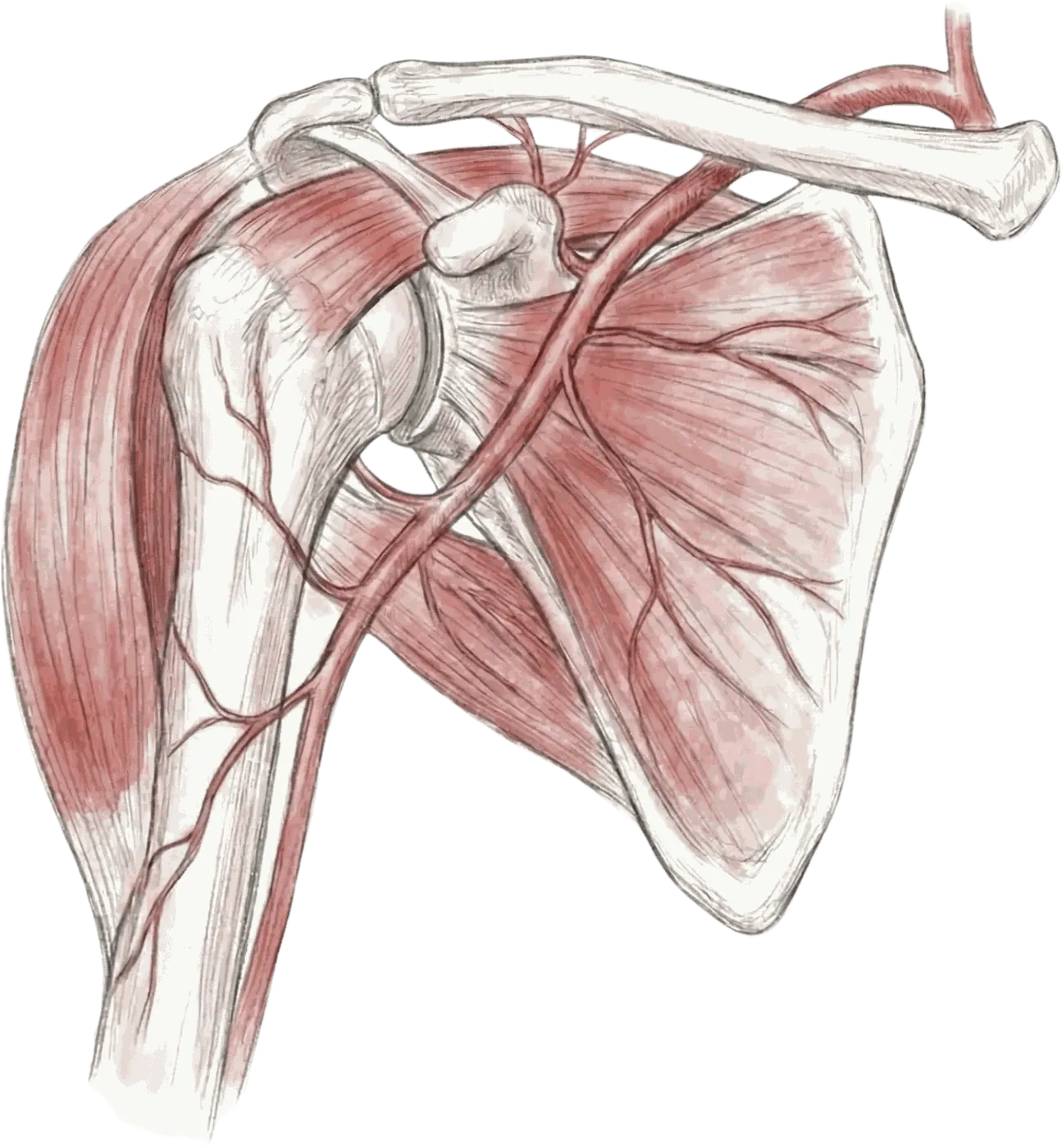
Frozen shoulder, or adhesive capsulitis, is pain and progressive stiffness in the shoulder that comes on without obvious injury. The capsule around the joint becomes inflamed, thickened and contracted. The night pain is often what people find hardest to live with.


Dr Mihir Desai & Dr Suhrid Lodh
Vascular & Interventional Radiologists · FRANZCR EBIR
Musculoskeletal embolisation is performed at St George and Macquarie University Hospitals. The same procedure is used for Achilles tendinitis and for knee osteoarthritis. More about the team →









The symptoms
Pain first, then stiffness, with movement lost in every direction rather than one.
It affects around 2 to 5% of people, more often women, more often those with diabetes, and most often in the fifties and sixties. Diagnosis is usually clinical. Imaging is used to exclude other causes rather than to confirm it.
Night pain is the defining complaint. Many people cannot lie on the affected side and do not sleep through.
The loss of function is significant. Reaching overhead, dressing, fastening a seatbelt and reaching behind the back all become difficult, and the combination of constant pain and broken sleep takes a real emotional toll. It is a wearing condition to live with, and that is often what brings people in rather than the stiffness itself.
It does not always resolve on its own
Frozen shoulder was long described as self-limiting over about two years. That has turned out to be optimistic.
At three and a half years after starting treatment, 12% of people still report a profound effect on their quality of life and function (Millar et al., 2022; Kim et al., 2020).
The capsule undergoes fibrosis: cells transform and lay down stiff, contracted tissue. Alongside that, the capsule becomes inflamed and grows new blood vessels, and new nerve fibres grow in with them. The stiffness and the pain come from related but distinct processes, which is why a shoulder can be extremely painful before it is particularly stiff.
Treatments, and where they run out
Evidence-based guidance for this condition remains limited, and a meaningful minority do not respond well.
Physiotherapy & anti-inflammatories
Physiotherapy and a home programme maintain range and are part of every stage. Anti-inflammatories manage symptoms alongside it.
Corticosteroid injection & hydrodilatation
Corticosteroid injection helps pain in the inflammatory phase, particularly early. Hydrodilatation distends the capsule with fluid to improve movement.
Shoulder embolisation
Reduces inflammation in the joint capsule through a pinhole, without an anaesthetic or a recovery period. Used when pain, and night pain in particular, is not responding to physiotherapy and injection.
Learn about the procedure →Surgery
Manipulation under anaesthesia and arthroscopic capsular release are reserved for shoulders that do not respond, and involve an anaesthetic and a recovery period. We work closely with shoulder surgeons and can refer you if surgery is the better option for you.
How embolisation is used here
Targeting the inflammation and the nerves that have grown in with it.
Because the inflammation involves the whole capsule, all the vessels supplying the shoulder need to be examined closely during the procedure, and each is treated where abnormal vessels are found.
MRI after the procedure shows reduced inflammation and reduced thickening of the joint capsule (Liang et al., 2025), which is objective evidence that the capsule itself changes rather than only the symptoms.
Temporary embolic material reduces flow through those vessels. The intent is to settle the inflammation and the pain-carrying nerves that have grown in with the new vessels. How microembolisation works →
The evidence
In published studies, embolisation has been associated with reductions in pain and improvements in function for some patients.
Shoulder embolisation was first described in 2014. In the published studies it has been safe and effective in carefully selected patients, with only mild and short-lived side effects reported.
Movement improved alongside the pain: mean forward flexion rose from 90° to 143° and abduction from 80° to 129° (Fernández Martínez et al., 2025).
A treatment at this stage of its evidence belongs in a university-affiliated hospital, where decisions are made collaboratively with the physiotherapists and shoulder surgeons involved in your care. We treat according to the best available evidence and contribute to the academic work in this field, and we will talk through what it means in your case when we see you.
Who it suits
Embolisation is considered once the usual measures have been given a fair run.
- A painful frozen shoulder, particularly with severe night pain
- Not responding to physiotherapy and injection
- Asked about sooner rather than later, since results have been better when treated earlier
If we think another treatment would suit you better, we will say so.
What happens, and recovery
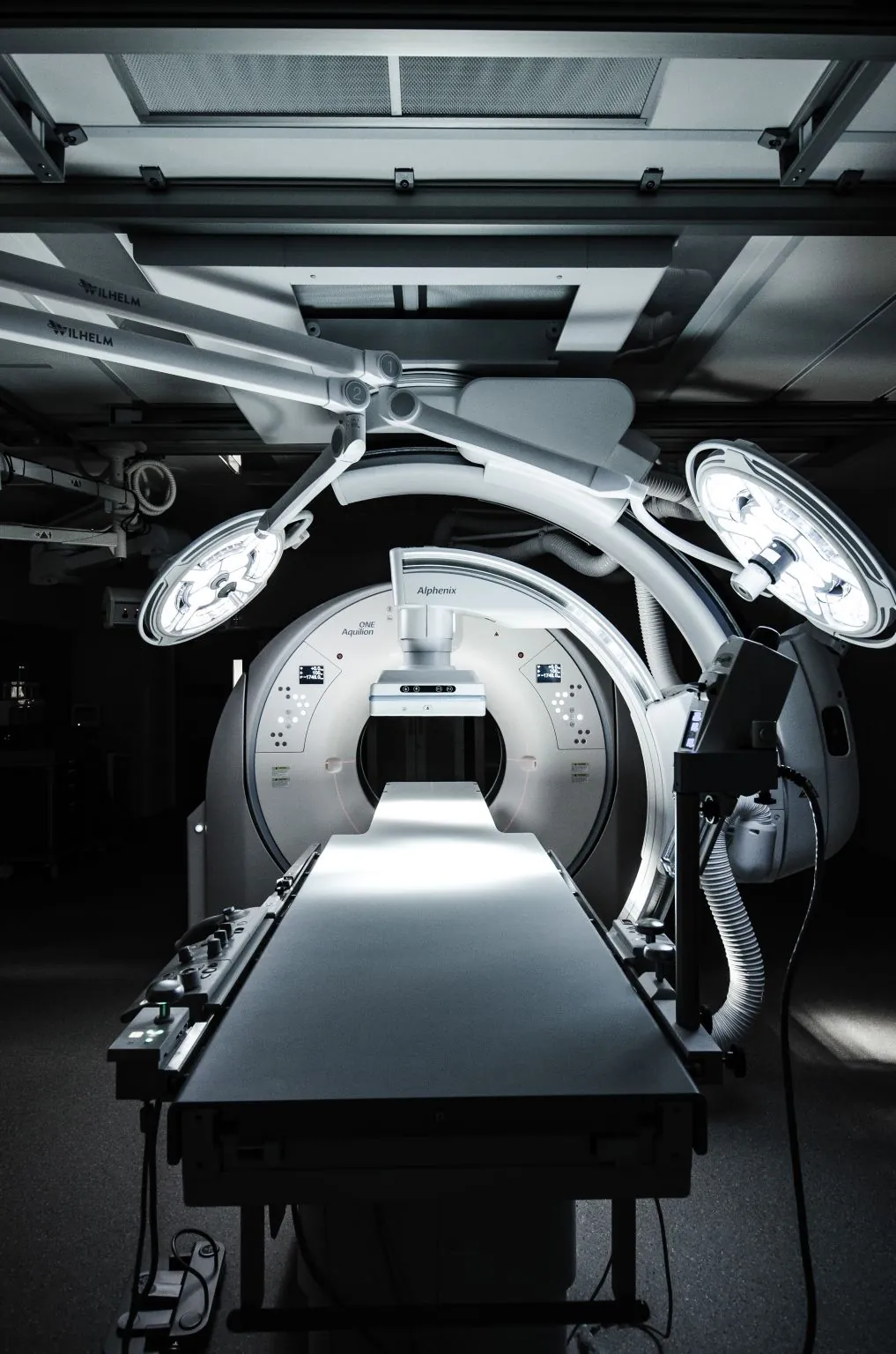
A day procedure through a pinhole at the wrist or groin, under local anaesthetic and light sedation. Most people go home the same day. Night pain is often the first thing to change.
Physiotherapy continues afterwards to recover the movement the pain had been preventing. Where movement remains limited once the pain has settled, we can also perform hydrodilatation, which distends the capsule with fluid to help restore range. Treating the pain first often makes that second step more tolerable and more effective.
Cost
Embolisation for the treatment of frozen shoulder is covered by Medicare. We consult and treat in both the private and the public hospital, whatever cover you hold. We are a known gap provider, so where there is an out-of-pocket amount for the procedure it is set out in a written estimate before anything is booked, and if that gap is what stands in your way we are happy to consider waiving it. Cost and Medicare in detail →

Find out whether embolisation could help your shoulder
Ask us a question, or send a referral. We reply within one business day.
Frequently asked questions
Common questions about this treatment and how our practice works.
Will it unfreeze my shoulder?
Is it better than a steroid injection?
I have had it for three years. Is it too late?
I am diabetic. Does that change things?
Will I need an anaesthetic?
Written and reviewed by Dr Mihir Desai · Last reviewed August 2026