Joint & Tendon Pain · Vascular & Interventional Radiology
Musculoskeletal Embolisation
Musculoskeletal embolisation, also called microembolisation, treats chronic joint and tendon pain by blocking the abnormal blood vessels that grow into damaged, inflamed tissue. Those vessels bring pain-sensing nerves with them, which is why the pain often persists despite rest, physiotherapy and injections. It is a minimally invasive, image-guided day procedure, performed through a pinhole under local anaesthetic and light sedation.


Dr Mihir Desai & Dr Suhrid Lodh
Vascular & Interventional Radiologists · FRANZCR EBIR
Musculoskeletal embolisation is performed at St George and Macquarie University Hospitals. More about the team →








Why abnormal blood vessels cause chronic pain
When a joint or tendon is damaged, the body's healing response can overcompensate, growing new, unnecessary blood vessels into the affected area. This is called hypervascularity.
These abnormal vessels bring something more problematic than inflammation alone. Each new vessel grows alongside a network of tiny pain-sensing nerves. It is these nerves, not just the inflammation itself, that drive the persistent, sharp or nocturnal pain in conditions like knee osteoarthritis, frozen shoulder and Achilles tendinopathy. Resting the joint reduces the mechanical load but does nothing to remove the vessels or the nerves accompanying them. This is why pain from these conditions often persists despite rest, physiotherapy and repeated injections.
How microembolisation works
An image-guided day procedure, performed through a small puncture under local anaesthetic and light sedation, that targets the abnormal vessels while leaving the normal blood supply intact.
Navigate to the abnormal vessels
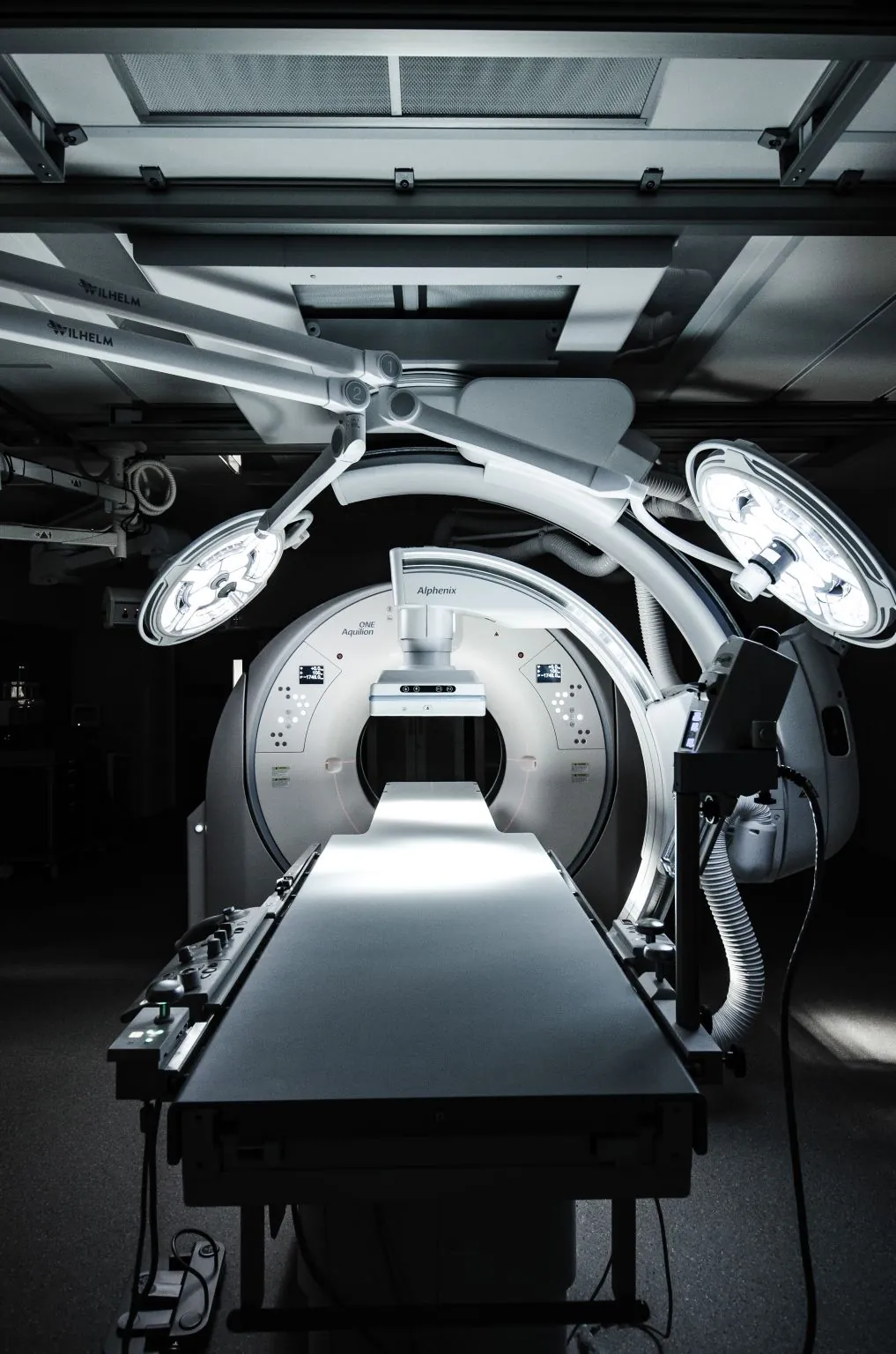
Dr Desai uses advanced image guidance to steer a micro-catheter, about 0.5 mm across, to the specific abnormal vessels feeding the inflamed tissue. At that scale, only advanced imaging makes the target visible.
Reduce the abnormal blood flow
Microscopic particles are released to reduce blood flow through the abnormal vessels only. The normal blood supply to the joint or tendon is not affected.
The pain settles
Without blood flow from the abnormal vessels, the pain-sensing nerves accompanying them become less active and inflammation reduces. Pain typically begins to settle within one to two weeks. It is a day case, with most patients back to light activity within days, no hospital stay and no rehabilitation period.
In published studies, microembolisation has been associated with improvements in pain and function for some patients. Every patient and every condition is different, and what the evidence shows for you is discussed at your consultation.
Conditions we treat
Microembolisation is offered for three conditions where abnormal vascularity is a well-recognised driver of chronic pain.
Knee osteoarthritis
Genicular Artery Embolisation (GAE)
GAE targets the abnormal vessels driving inflammation in the knee joint lining. It is used for patients whose knee pain no longer responds to physiotherapy or injections, and who want to delay or avoid knee replacement.
Knee osteoarthritis treatment (GAE) →Frozen shoulder
Shoulder Embolisation
Shoulder embolisation reduces inflammation in the joint capsule of a frozen shoulder. It is used when pain and stiffness are not responding to physiotherapy or manipulation, and is particularly suited to the painful early stage of the condition.
Frozen shoulder treatment →Achilles tendinitis
Achilles Tendon Embolisation
Achilles tendon embolisation targets the abnormal vessels that grow into a chronically inflamed Achilles tendon. It is used for patients who have completed a minimum of three months of physiotherapy without adequate improvement.
Achilles tendinitis treatment →A circuit breaker, not a replacement for rehabilitation
Microembolisation is not a replacement for physiotherapy or exercise. Reducing the inflammatory driver creates a window during which physiotherapy can be easier to engage with. Patients who struggled to engage with rehabilitation because of pain can often do so more productively after the procedure.
For knee osteoarthritis, microembolisation targets the inflammation rather than the mechanical structure of the joint. It is not appropriate for everyone: those with severe structural damage are better suited to joint replacement. For some patients it provides meaningful symptom relief while they wait for surgery, or delays the need for it. It has not been shown to be effective for hip, ankle or shoulder osteoarthritis, and we do not offer treatment for those conditions.
Who is a good candidate?
Microembolisation suits patients with confirmed chronic joint or tendon inflammation who have not responded to at least three months of physiotherapy, and where imaging confirms abnormal vascularity in the affected tissue.
Patient selection depends on the condition. For knee osteoarthritis, microembolisation targets inflammation rather than structural joint damage, so patients with severe mechanical damage are better suited to joint replacement. For frozen shoulder and Achilles tendinopathy, the procedure works best in the earlier inflammatory stages, where abnormal vascularity is confirmed on ultrasound or MRI.
Dr Desai reviews your imaging and symptoms at your initial consultation and advises whether microembolisation is right for you.
GPs and specialists can refer via HealthLink mihdesai, by email, or phone (02) 9812 3838.
Frequently asked questions
Common questions about microembolisation. If you're still unsure whether it's right for you, ask us directly.
What is microembolisation?
How is microembolisation different from surgery?
How long does the procedure take?
When will I feel results?
Is microembolisation covered by Medicare?
Can I have microembolisation if I have already had a steroid injection?
How is this different from a cortisone injection?
Will microembolisation affect future surgery?
Your next step
Find out if microembolisation could help
Whether microembolisation suits you can only be confirmed at a consultation that includes your imaging. That is the place to find out honestly whether it is likely to help.
Cost & Medicare: microembolisation is covered by Medicare, and we consult and treat in both the private and the public hospital. We are a known gap provider and will consider waiving the gap. A GP or specialist referral is required. Cost and Medicare in detail →
GP or specialist? Refer a patient →
Written and reviewed by Dr Mihir Desai · Last reviewed August 2026