Knee Osteoarthritis · Vascular & Interventional Radiology
Genicular Artery Embolisation (GAE)
Genicular artery embolisation treats knee osteoarthritis pain by blocking the abnormal blood vessels that drive inflammation in the joint lining. It's a minimally invasive, image-guided procedure, done through a pinhole under light sedation and usually as a day procedure. It's an option for knee pain that no longer responds to physiotherapy or injections.


Dr Mihir Desai & Dr Suhrid Lodh
Vascular & Interventional Radiologists · FRANZCR EBIR
Genicular artery embolisation is performed at St George and Macquarie University Hospitals. More about the team →









What causes knee osteoarthritis pain?
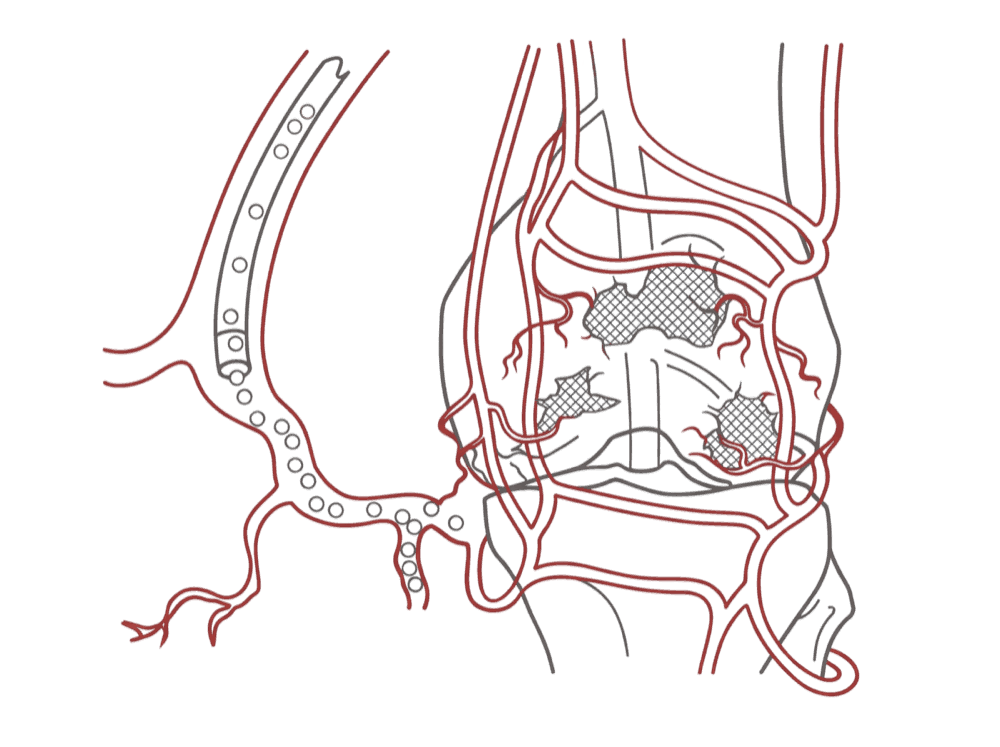
Knee osteoarthritis pain is not simply worn cartilage. Much of it comes from inflammation in the joint lining, called synovitis. When the joint is damaged, the body grows abnormal new blood vessels into the inflamed area, bringing extra inflammatory cells and pain-sensing nerves with them.
Anti-inflammatories and injections calm that inflammation for a while, but they don't remove its source. GAE targets those abnormal vessels directly, leaving the normal blood supply to the knee intact.
How does GAE work?
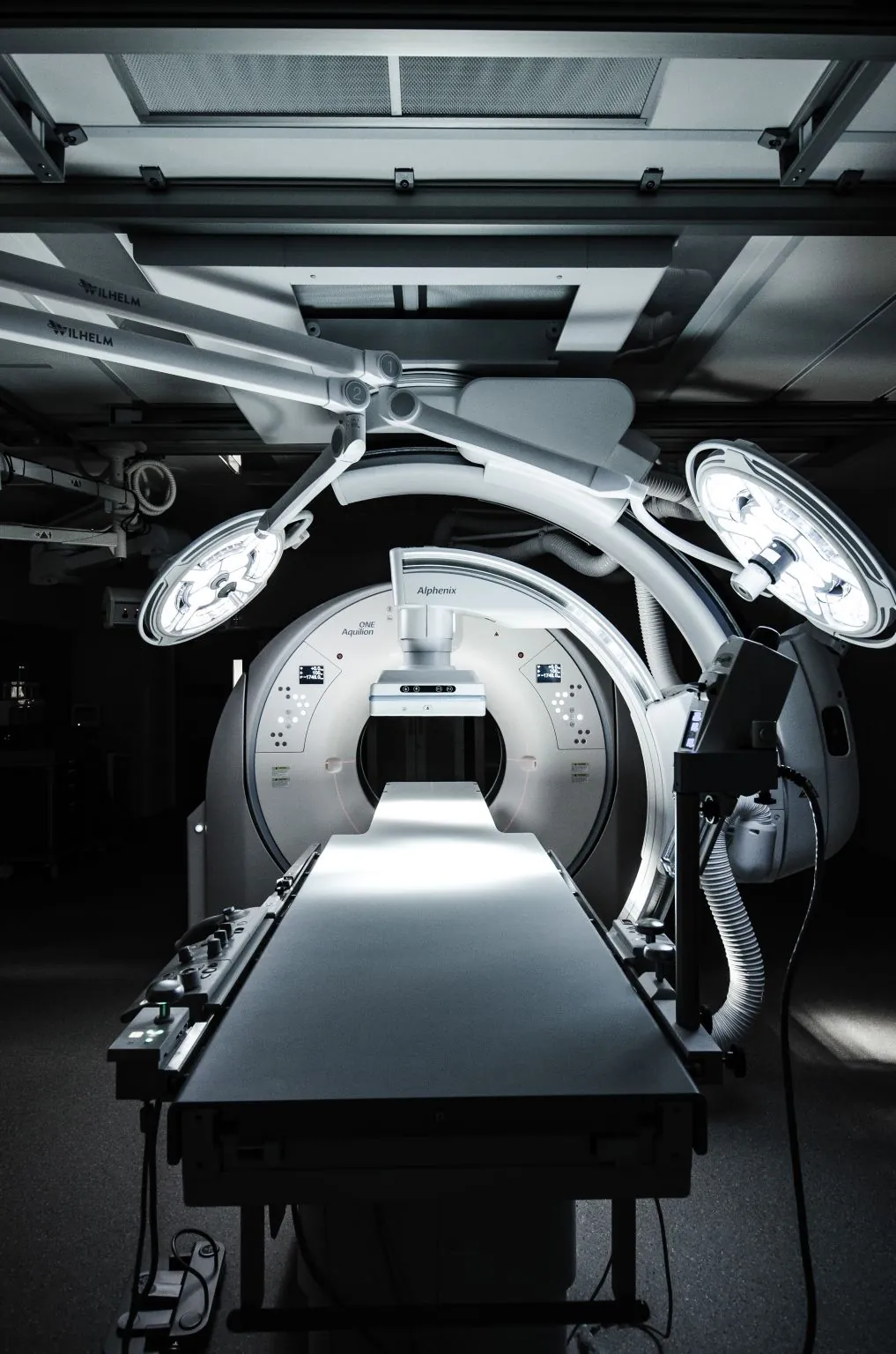
An image-guided day procedure, performed through a small puncture at the groin under local anaesthetic and light sedation.
Pinhole access
A small puncture at the groin under local anaesthetic and light sedation, with no surgical incision.
Block the abnormal vessels
Using advanced imaging, a micro-catheter about 0.5 mm across is guided to the arteries feeding the inflamed tissue. Microscopic particles, some as small as 100 microns, then block the abnormal vessels while the normal blood supply to the knee stays intact.
Home the same day
The procedure takes one to two hours. You rest for a few hours and go home the same afternoon; pain reduction typically begins within one to two weeks.
Does GAE work? What the clinical trials show
The option between injections and surgery
For knee osteoarthritis, most people are offered two things: injections and tablets to manage the pain now, or, further down the track, a knee replacement. There is another option in between, and because it is newer, many people simply haven't heard of it.

Your journey with us
From first contact to recovery
Here's what to expect, from your first phone call through to recovery.
- 1Get in touchAsk your GP for a referral, or contact our rooms directly. You don't need a referral just to ask a question.
- 2Your consultationDr Desai reviews your symptoms and imaging, and explains whether GAE is likely to help.
- 3The procedureIf GAE suits you, it's scheduled as a minimally invasive day procedure, through a pinhole under light sedation.
- 4RecoveryYou rest for a few hours, then head home. Most patients notice pain easing within one to two weeks.
Cost & Medicare: GAE is covered by Medicare, and we see patients privately or in the public hospital system. More on cost →
GP or specialist? Refer a patient →
So, could GAE be an option for you?
Which one suits you comes down to the stage your knee is at, and that is what a consultation is for. Not sure where yours sits? These five quick questions are a good place to start, to see whether GAE is worth raising with us. This is general information, not a diagnosis.
To find out whether GAE is likely to suit your knee, the clearest step is a consultation, where we review your imaging and symptoms. Request a consultation →
Would rather just talk it through? Request a consultation →
Frequently asked questions
Common questions about GAE. If you're still unsure whether it's right for you, ask us directly.
What is Genicular Artery Embolisation?
How is GAE different from a knee replacement?
Will GAE stop me having a knee replacement later?
When will I feel results?
What side effects should I expect?
Is GAE covered by Medicare or my private health insurance?
Can I have GAE if I've already had a cortisone or steroid injection?
How is GAE different from a cortisone injection?
Do I need a referral?
Written and reviewed by Dr Mihir Desai · Last reviewed August 2026