Genicular Artery Embolisation
How GAE compares with injections and surgery
For knee osteoarthritis, most people are offered injections to manage the pain or, further down the track, a knee replacement. GAE is an option that sits in between. Here is how it compares with each, and where it tends to fit.


Dr Mihir Desai & Dr Suhrid Lodh
Vascular & Interventional Radiologists · FRANZCR EBIR
Genicular artery embolisation is performed at St George and Macquarie University Hospitals. More about the team →
Where each option fits
GAE compared with injections
Injections and anti-inflammatories are usually the first thing tried, and for many people they help. The difference is what each one does: injections calm the inflammation for a time, while GAE goes after the vessels feeding it.
Genicular Artery Embolisation
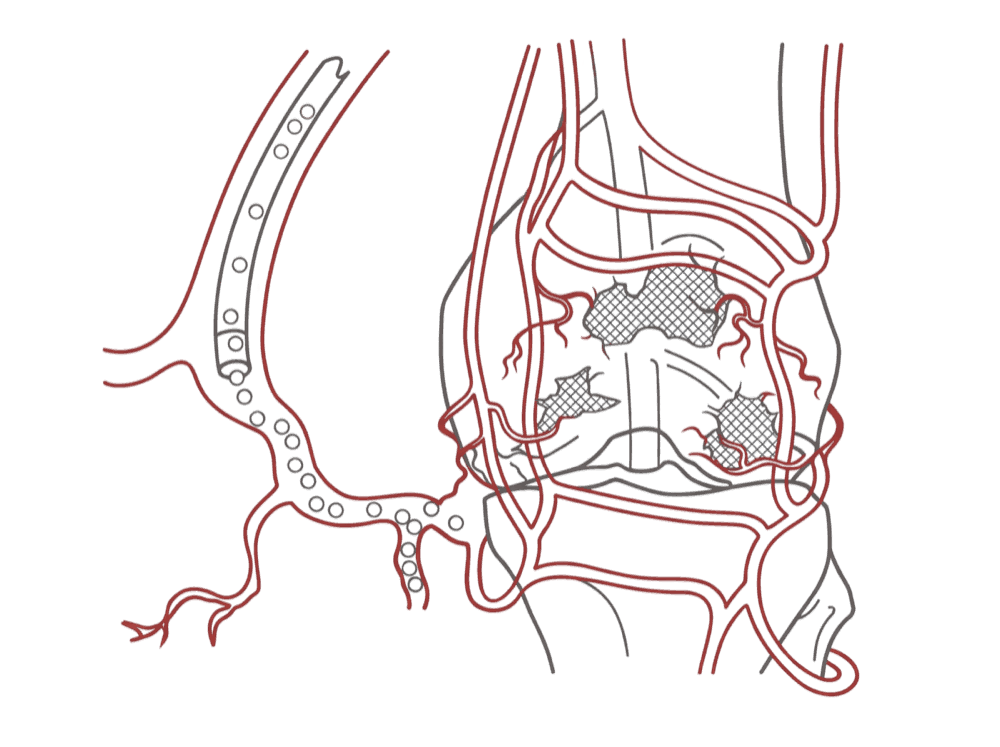
GAE goes after what is driving the inflammation: the abnormal blood vessels feeding the joint lining. By reducing that blood supply, it aims to ease pain for longer than a course of injections usually does, without repeating the treatment every few months. It is a single day procedure rather than an ongoing series of visits.
Injections & anti-inflammatories
Corticosteroid or gel (hyaluronic acid) injections, alongside anti-inflammatory tablets, are usually the first thing tried, and they can settle a flare and ease pain for a while, which is genuinely useful. The relief tends to be temporary, though, because they calm the inflammation without removing what is driving it, so the pain often returns.
Injections still have a place, including while you weigh up your options, and having had them does not rule GAE in or out. If they have stopped giving you lasting relief, GAE may be worth raising at a consultation.
GAE compared with a knee replacement
At the other end of the scale sits a knee replacement. It and GAE are often confused, but they are not competing options. One treats the inflammation that drives the pain, the other replaces a joint that has worn out. Which one suits you depends on how far your osteoarthritis has progressed.
Genicular Artery Embolisation
Most people with knee osteoarthritis have some worn cartilage. What matters more is how far it has progressed. In the early and middle stages, much of the pain comes from inflammation in the joint lining, not the cartilage itself.
GAE settles that inflammation by blocking the abnormal blood vessels feeding it. It does not repair or replace cartilage; it targets what is driving the pain. For the right patient it can reduce pain and put off the need for surgery, sometimes by months or years.
Having GAE first does not close off a knee replacement later. In the largest study to date, patients who went on to have a knee replacement after GAE had no more surgical complications than those who had a replacement without it (Albrecht et al., CVIR, 2025).
Knee Replacement
As the arthritis reaches its later stages, the picture changes. The cartilage is largely gone, the bones begin to rub together and the joint can start to change shape. At that point the problem is a structural one, and calming the inflammation is no longer enough.
A knee replacement removes the worn joint and puts an artificial one in its place. It is the established treatment for severe, end-stage osteoarthritis: bigger surgery, done under a general anaesthetic and with a longer recovery, but it directly fixes a joint that has worn out.
Not sure which fits you?
Try the two-minute self-check on the GAE overview, or ask us directly. Dr Desai reviews your imaging and symptoms at your consultation and advises which option is likely to suit your knee.
Explore more
Written and reviewed by Dr Mihir Desai · Last reviewed August 2026