Prostate Artery Embolisation
What to expect from PAE, start to finish
From the first consultation through to the weeks after, here is what prostate artery embolisation actually involves. It is a minimally invasive, image-guided day procedure, accessed through a small puncture at the wrist or groin, with no instruments passing through the urethra.


Dr Suhrid Lodh & Dr Mihir Desai
Vascular & Interventional Radiologists · FRANZCR EBIR
Prostate artery embolisation is performed at St George and Macquarie University Hospitals, by two interventional radiologists who focus on the procedure. More about the team →

What happens at your consultation
- 1We review your historyWe talk through your urinary symptoms, how much they affect your daily life and sleep, and what you have already tried, including medications.
- 2We review your imagingWe assess your prostate size and anatomy on imaging, and arrange any further scans needed to plan the procedure and rule out other causes.
- 3We explain your optionsWe explain whether PAE is likely to help in your case, how it compares with medication and surgery, and the benefits and risks, honestly.
A referral and your assessment
A GP or specialist referral is required to see us. Your GP can refer via HealthLink (EDI: mihdesai), by email, or by phoning our rooms. A full urological assessment before PAE is standard practice, so that we are treating the right problem and PAE is the right fit.
It helps to bring any recent imaging, a list of your current medications, and any prostate blood test (PSA) results you have. If you're weighing up your options, you don't need a referral simply to ask us a question. For costs, see cost & Medicare.
What happens on the day
Pinhole access
A small puncture is made at the wrist or groin under local anaesthetic and light sedation. There is no surgical incision, and no instruments pass through the urethra.
Micro-catheter to the prostate
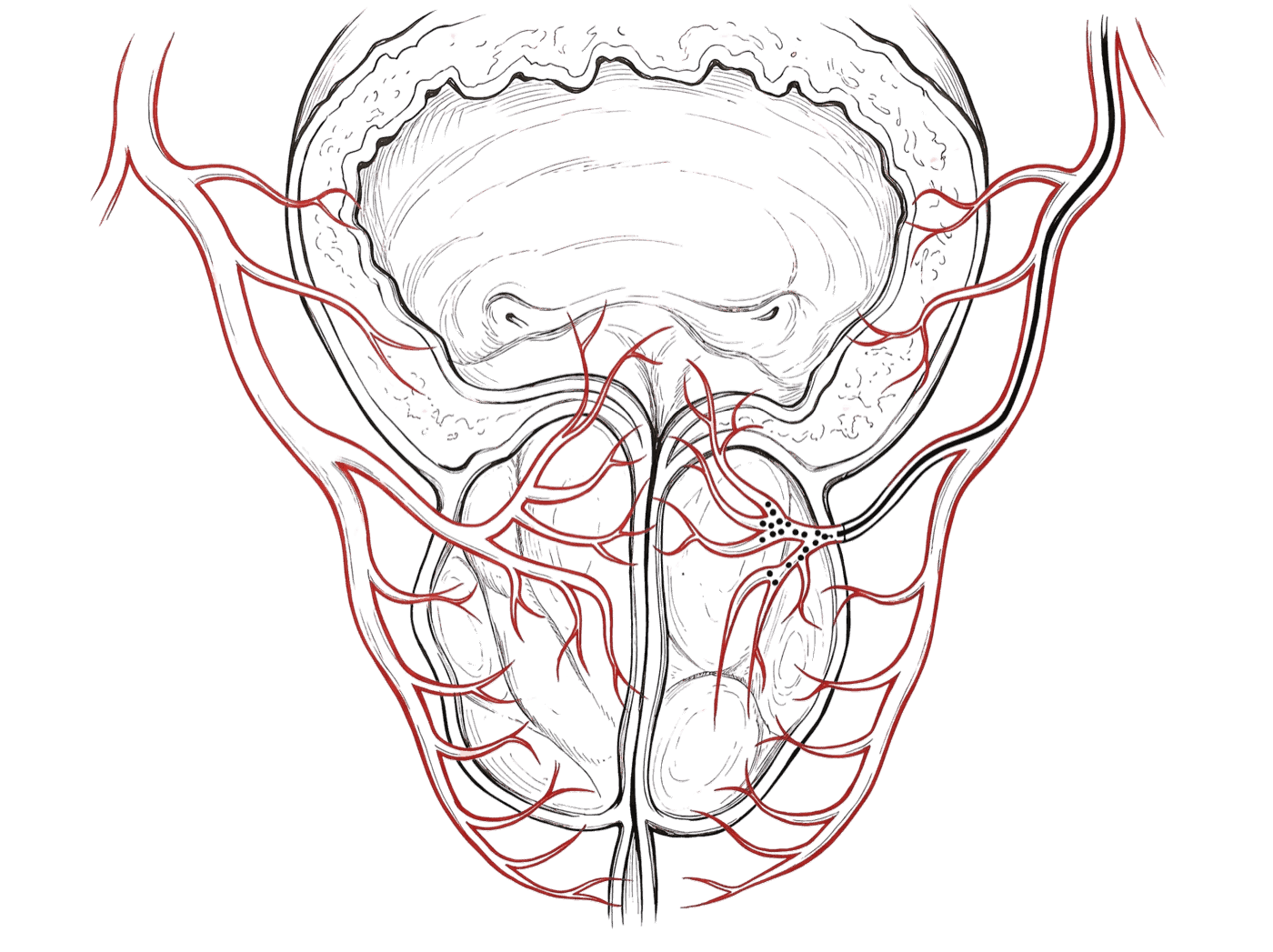
Using advanced imaging, a micro-catheter is guided through the arteries to the small vessels supplying the enlarged prostatic tissue.
Reduce the blood supply
Microscopic particles reduce blood flow to the prostate. Tissue is not removed; the supply that sustains the enlargement is reduced. Both sides of the gland are usually treated.
Home the same day
You rest for a few hours and head home the same day, with a small dressing at the access point and no urinary catheter. The gland then shrinks gradually over the following weeks.
How long it takes, and going home
The procedure usually takes up to a couple of hours, depending on your anatomy. Because it is performed through the arterial system rather than through the urethra, there is no rehabilitation period, and most men return to light activity within days.
Most men notice their urinary symptoms improve within two to four weeks as the prostate softens, with the full effect developing over three to six months. For what to expect afterwards, see recovery & aftercare.

Your recovery timeline
- 1The same dayYou rest for a few hours and head home the same afternoon, with a small dressing at the access point and no urinary catheter.
- 2The first daysSome pelvic discomfort, a mild fever and temporary changes in urinary frequency are common. This is an expected response to the embolisation and settles by itself, usually with simple pain relief.
- 32–4 weeksMost men notice their urinary symptoms begin to ease as the prostate softens. Everyday activity can usually resume within days of the procedure.
- 43–6 monthsThe full effect develops over three to six months as the gland gradually shrinks and pressure on the urethra lifts.
What's normal, and when to call
The mild discomfort, low fever and changes in urinary frequency in the first week or two are known as post-embolisation syndrome. It is an expected response and resolves without treatment. Access-site bruising is minor and self-limiting.
Contact our rooms if you have a high fever, difficulty passing urine, or worsening pain that is not settling. Every patient and every procedure is different, and the specific aftercare advice for your situation is given to you on the day. Most men notice improvement within two to four weeks, with the full effect over three to six months.
Considering PAE?
We review your imaging and symptoms at your consultation and advise whether your urinary symptoms are likely to respond to PAE.
Explore more
Written and reviewed by Dr Mihir Desai & Dr Suhrid Lodh · Last reviewed August 2026