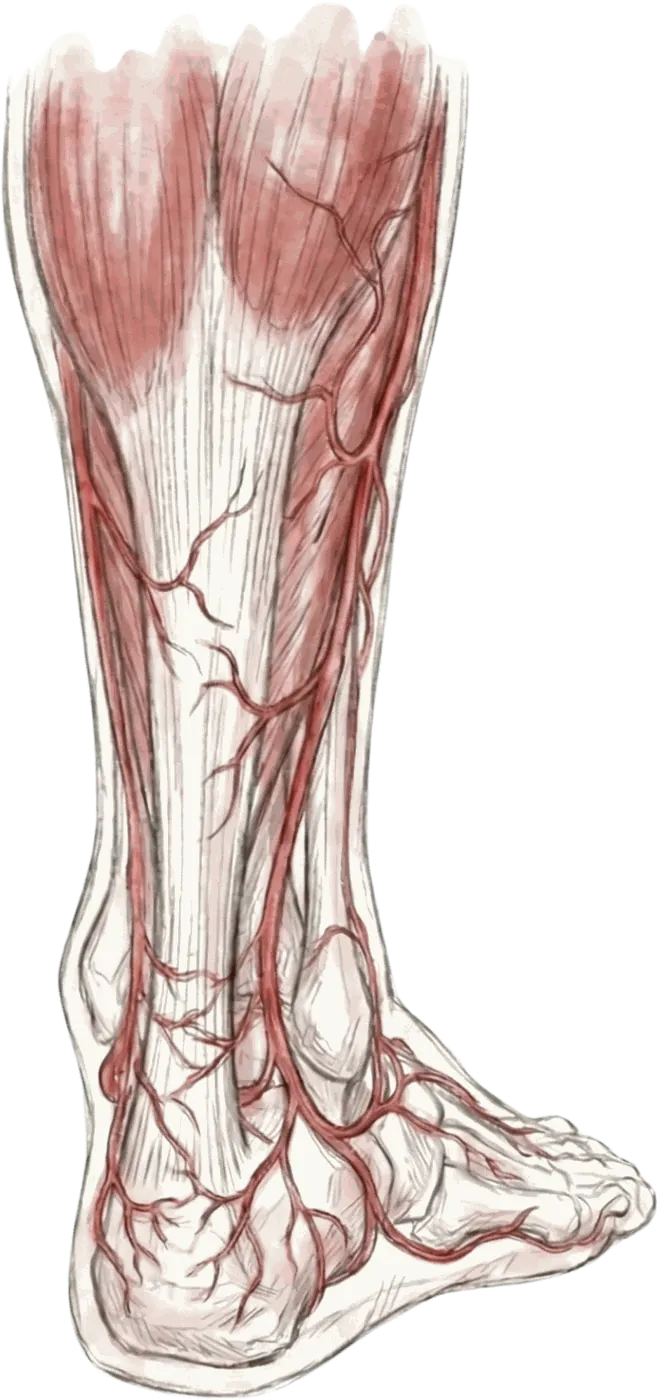
Heel & Ankle · Condition overview
Achilles Tendinitis
Achilles tendinitis, also called Achilles tendinopathy, is pain and thickening of the tendon that runs from the calf to the heel. Most cases settle with loading exercise and time. A proportion do not, and pain that has persisted for months despite good rehabilitation is a different problem from a recent strain.


Dr Mihir Desai & Dr Suhrid Lodh
Vascular & Interventional Radiologists · FRANZCR EBIR
Musculoskeletal embolisation is performed at St George and Macquarie University Hospitals. The same procedure is used for frozen shoulder and for knee osteoarthritis. More about the team →








The symptoms
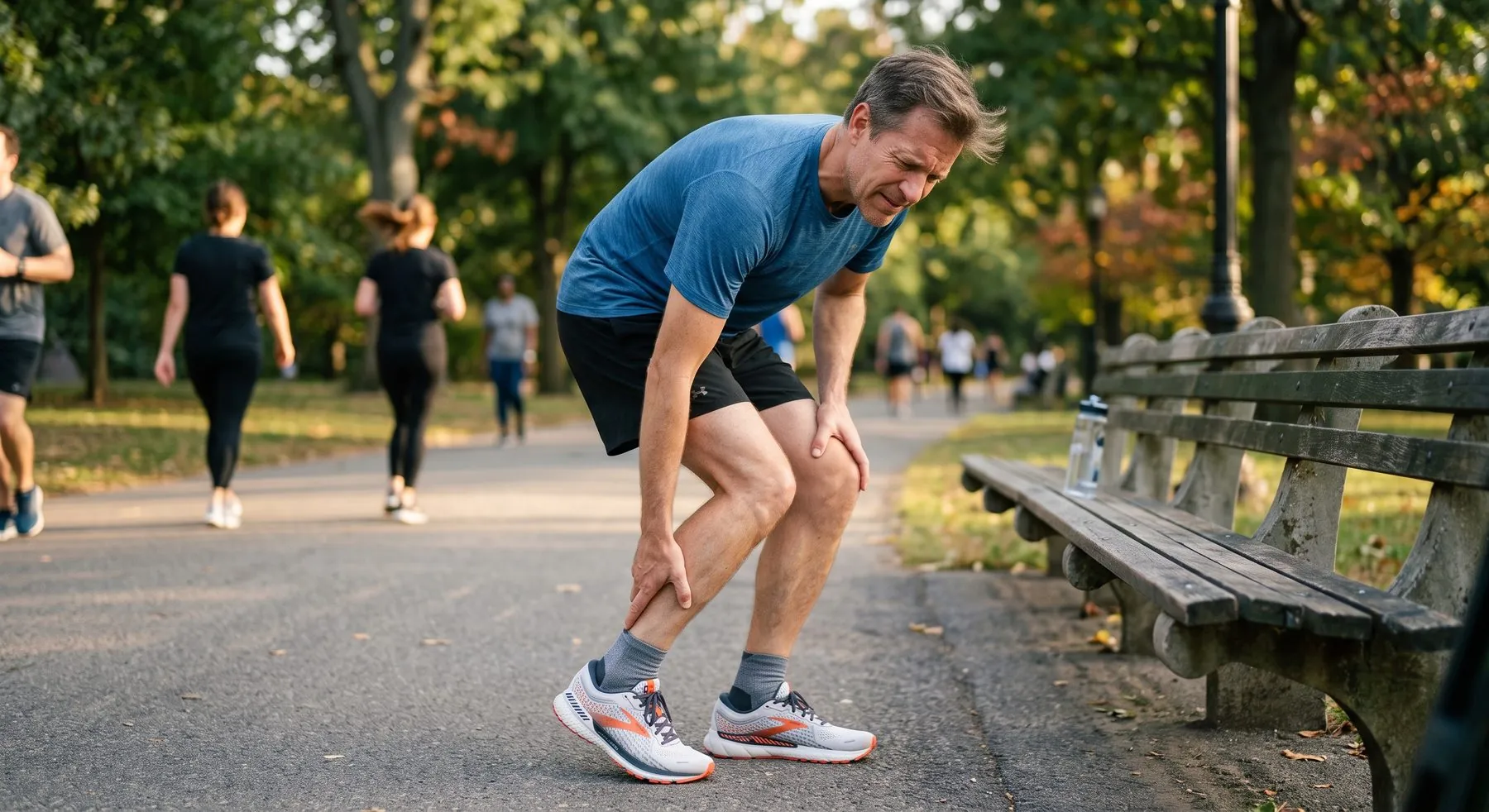
Pain and stiffness at the back of the heel, worst first thing in the morning.
Pain and stiffness at the back of the heel, worst in the first steps of the morning and after sitting. The tendon may be visibly thickened and tender to squeeze. Pain that eases as you warm up and returns afterwards is characteristic. It affects people who run and people who do not.
Two patterns matter, because they behave differently: mid-portion tendinopathy, two to six centimetres above the heel bone, and insertional tendinopathy, where the tendon meets the heel bone. We treat both.
Why it keeps hurting
A healthy tendon has very little blood supply. A chronically painful one grows new vessels into the damaged tissue.
New blood vessels grow into the damaged tissue, and nerve fibres grow in alongside them. Those nerves are the reason the tendon hurts. Because the new vessels keep delivering inflammatory signals, and the nerves keep reporting pain, the two sustain each other. This is why the pain can outlast the original injury by years.
Ultrasound and MRI show this as tendon thickening, disorganised fibres, and increased blood flow around the tendon.
Treatments, and where they run out
Care starts with loading and steps up as needed. There is more between exhausted rehabilitation and surgery than most people are offered.
Physiotherapy & orthotics
A structured eccentric or heavy slow resistance programme, done consistently for at least three months, resolves a large proportion of cases. Activity modification, heel raises and orthotics reduce load while the tendon settles.
Extracorporeal shockwave therapy
Shockwave therapy is used when a loading programme alone has not been enough. It is non-invasive and is usually given over several sessions.
Achilles tendon embolisation
Targets the abnormal vessels that grow into a chronically inflamed tendon, through a pinhole and without a wound or a general anaesthetic. It is used for patients who have completed a minimum of three months of physiotherapy without adequate improvement.
Learn about the procedure →Surgery
There are several different surgical options, broadly aimed at removing the degenerate portion of the tendon. Surgery is effective for some patients but involves a wound, a general anaesthetic and a long rehabilitation. We work closely with foot and ankle surgeons and can refer you if surgery is the better option for you.
Corticosteroid injection is generally avoided around the Achilles because of concerns about tendon weakening.
How embolisation is used here
Targeting the abnormal vessels rather than the tendon itself.
A micro-catheter is guided from a pinhole in the groin into the small branches of the posterior tibial or peroneal arteries that supply the painful part of the tendon. On angiography the abnormal area shows as a blush of new vessels.
Temporary embolic material reduces the flow through those vessels, with the intent of settling the pain-carrying nerves that accompany them, while the tendon’s normal blood supply is left intact. How microembolisation works →
The evidence
In published studies, embolisation has been associated with reductions in pain and improvements in function for some patients.
Embolisation for Achilles tendinopathy has only been studied over the past decade. In the published series it has been safe and effective in carefully selected patients, with only minor complications reported: temporary skin redness, altered sensation, and small bruises where the catheter went in.
A treatment at this stage of its evidence belongs in a university-affiliated hospital, where decisions are made collaboratively with the physiotherapists, sports physicians and surgeons involved in your care. We treat according to the best available evidence and contribute to the academic work in this field, and we will talk through what it means in your case when we see you.
Who it suits
Embolisation is considered once the usual measures have been given a fair run.
- Pain has persisted beyond three to six months
- A proper loading programme has been completed without adequate benefit
- Imaging shows the changes described above
It is not a first treatment, and it is not a substitute for rehabilitation. If we think another treatment would suit you better, we will say so.
What happens, and recovery
A day procedure through a pinhole in the groin, under local anaesthetic and light sedation. Most people go home the same day and return to light activity within a few days. Pain often settles over weeks rather than immediately.
Embolisation improves pain and function, but physiotherapy remains a key part of the recovery. Strengthening the calf muscle and the tendon itself is what restores durable function, and that work continues after the procedure. Embolisation is intended to make that rehabilitation possible, not to replace it.
Cost
Embolisation for the treatment of Achilles tendinopathy is covered by Medicare. We consult and treat in both the private and the public hospital, whatever cover you hold. We are a known gap provider, so where there is an out-of-pocket amount for the procedure it is set out in a written estimate before anything is booked, and if that gap is what stands in your way we are happy to consider waiving it. Cost and Medicare in detail →

Find out whether embolisation could help your Achilles pain
Ask us a question, or send a referral. We reply within one business day.
Frequently asked questions
Common questions about this treatment and how our practice works.
Is this the same as a cortisone injection?
Will my tendon be weakened?
How long until it works?
Do I still need physiotherapy?
Can both sides be treated?
Written and reviewed by Dr Mihir Desai · Last reviewed August 2026