Knee · Condition overview
Knee Osteoarthritis
Knee osteoarthritis is one of the most common causes of ongoing knee pain and stiffness. The cartilage in the knee gradually thins and the joint lining becomes inflamed, and much of the pain comes from that inflammation, not worn cartilage alone. That is why treatment ranges from physiotherapy and injections to genicular artery embolisation and, for severe arthritis, a knee replacement. What helps depends on the stage your knee is at.


Dr Mihir Desai & Dr Suhrid Lodh
Vascular & Interventional Radiologists · FRANZCR EBIR
Knee osteoarthritis is assessed and treated at St George and Macquarie University Hospitals. More about the team →








Symptoms of knee osteoarthritis
Osteoarthritis usually comes on gradually, over months or years. Symptoms often come and go at first, with flare-ups after activity, then become more constant over time.
- Pain that worsens with walking, stairs or standing
- Stiffness, especially first thing in the morning or after sitting
- Swelling around the joint after activity
- A grinding, clicking or catching sensation
- Reduced range of movement, or the knee feeling tight
- Aching at night that can disturb sleep
- The knee occasionally giving way or feeling unstable
- Difficulty with everyday tasks such as kneeling or getting up
How much the symptoms limit you matters more than what shows on a scan, and how bad they feel does not always match the amount of cartilage loss.
Diagnosis starts with your history and an examination of how the knee moves, with an X-ray or MRI to confirm the picture and show how far the arthritis has progressed. Bringing any recent scans to your consultation helps us give a clear, honest view of what is driving your pain and which treatments are likely to help.

What causes the pain?
Osteoarthritis is often described simply as "wear and tear", but that only tells part of the story. The cartilage that cushions the joint does gradually thin, yet a lot of the pain comes from inflammation in the joint lining, called synovitis.
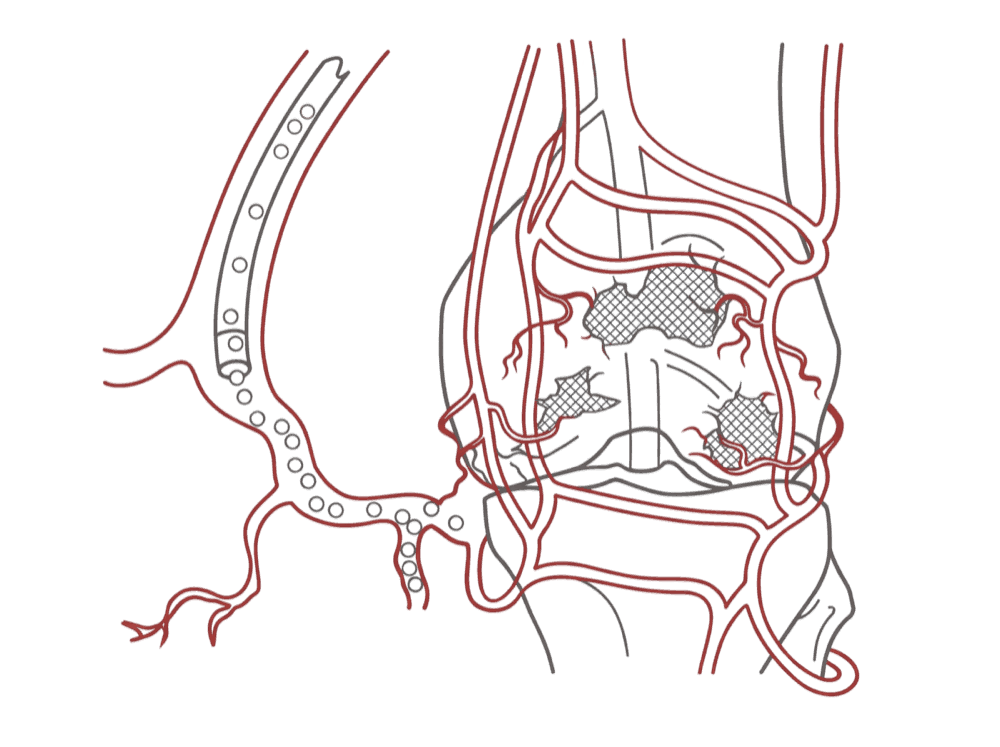
When the joint is irritated, the body grows abnormal new blood vessels into the inflamed area, bringing extra inflammatory cells and pain-sensing nerves with them. This is why the amount of pain does not always match the amount of cartilage loss, and why calming the inflammation can make such a difference to how the knee feels.
The stages of knee osteoarthritis
Osteoarthritis is usually thought of in stages. Knowing roughly where your knee sits matters, because it guides which treatments are likely to help. The stage matters more than cartilage loss alone.
Early
Inflammation-driven pain
Cartilage is only mildly affected and the joint still moves well. Pain tends to flare after activity, then settle. Much of it is driven by inflammation in the lining, which usually responds to physiotherapy, weight management and anti-inflammatories.
Moderate
Persistent, limiting pain
Cartilage has thinned further and pain becomes more constant, disturbing sleep and limiting everyday activity. Inflammation still drives a large part of it. This is the stage where injections and newer options such as genicular artery embolisation are often considered.
Severe (end-stage)
Structural joint change
Cartilage is largely gone, the bones begin to rub together and the joint can change shape. The problem is now structural, and calming inflammation is no longer enough. A knee replacement is the established treatment at this stage.
These stages are a guide, not strict boundaries, and knees do not always progress in a straight line. A consultation, with your imaging, is what tells us where yours actually sits.
How knee osteoarthritis is treated
There is no single treatment for everyone. Care usually starts with the simplest measures and steps up as needed. Most people move along this path in order, and there is more between injections and surgery than many realise.
Physiotherapy & lifestyle
Targeted exercise, strengthening the muscles around the knee, and where relevant weight management, remain the foundation. For milder osteoarthritis they can meaningfully reduce pain and keep you active.
Injections & medication
Anti-inflammatory tablets and corticosteroid or gel injections can settle a flare and ease pain for a time. They calm the inflammation without removing what is driving it, so the relief is usually temporary.
Genicular Artery Embolisation
A minimally invasive, image-guided day procedure that blocks the abnormal blood vessels feeding the inflammation. It is an option when physiotherapy and injections no longer give lasting relief, but a knee replacement is not yet warranted.
Learn about GAE →Knee replacement
For severe, end-stage osteoarthritis, surgery removes the worn joint and replaces it with an artificial one. It is bigger surgery under a general anaesthetic with a longer recovery, but it directly rebuilds a joint that has worn out.
The option between injections and surgery
Most people with knee osteoarthritis are offered two things: injections and tablets to manage the pain now, or, further down the track, a knee replacement. There is another option in between. Because it is newer, many people simply have not heard of it.
Genicular artery embolisation (GAE) targets the inflammation that drives much of the pain, by blocking the abnormal blood vessels feeding the joint lining. It is done through a pinhole at the groin, under light sedation, as a day procedure, without replacing the joint. In the earlier and middle stages, where inflammation is a major driver of pain, it can offer relief and help put off surgery, and having GAE first does not close off a knee replacement later.
GAE is not a repair for a worn-out joint, and it is not for everyone. Which option suits you comes down to the stage your knee is at, and that is what a consultation is for. Read more about genicular artery embolisation →

Your next step
Understand what is driving your knee pain
A consultation is the clearest way to find out what stage your knee is at, and which treatments are likely to help. Here is what to expect.
- 1Get in touchAsk your GP for a referral, or contact our rooms directly. You don't need a referral just to ask a question.
- 2Your consultationDr Desai reviews your symptoms and imaging, and explains the stage your knee is at and your options.
- 3A clear planYou leave with an honest view of what is likely to help, whether that is conservative care, GAE, or a referral for surgery.
Considering GAE? It is covered by Medicare, and we see patients privately or in the public hospital system. More on cost →
GP or specialist? Refer a patient →
Frequently asked questions
Common questions about knee osteoarthritis. If you are unsure what is right for you, ask us directly.
What is knee osteoarthritis?
Is knee osteoarthritis just wear and tear?
Can knee osteoarthritis be treated without surgery?
Do I need a knee replacement?
What is genicular artery embolisation, and how does it fit in?
When should I see a specialist about knee pain?
Explore more
Written and reviewed by Dr Mihir Desai · Last reviewed August 2026