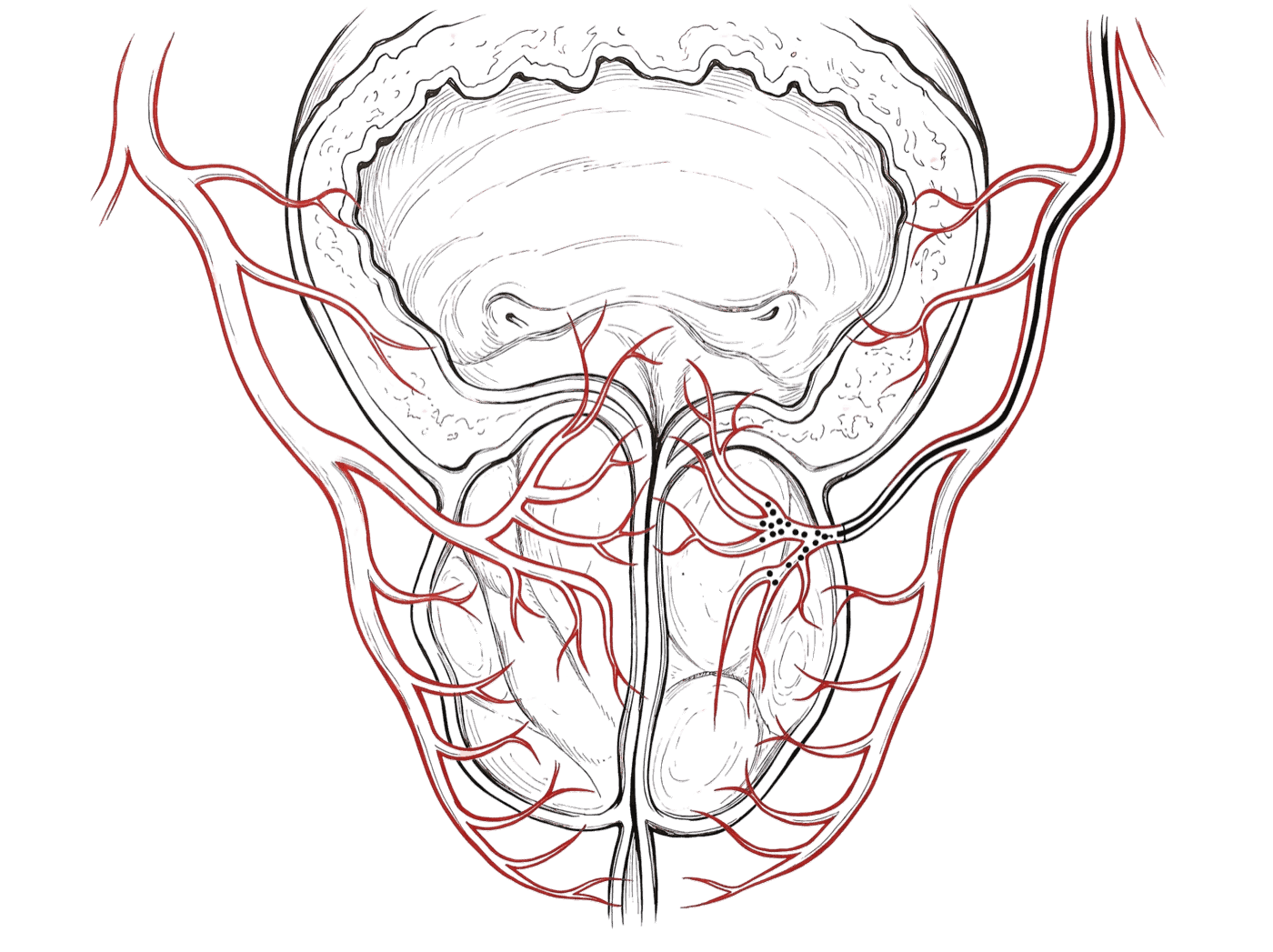
Prostate · Condition overview
Enlarged Prostate (BPH)
An enlarged prostate, or benign prostatic hyperplasia (BPH), is one of the most common causes of urinary symptoms in men as they age. The prostate surrounds the urethra, so as it enlarges it squeezes the flow of urine, causing a weak stream, frequency and getting up at night. It is not prostate cancer. Treatment ranges from lifestyle changes and medication to prostate artery embolisation and, for larger glands, surgery.


Dr Suhrid Lodh & Dr Mihir Desai
Vascular & Interventional Radiologists · FRANZCR EBIR
Enlarged prostate is assessed and treated at St George and Macquarie University Hospitals, by two interventional radiologists who focus on prostate artery embolisation. More about the team →








Symptoms of an enlarged prostate
Symptoms come on gradually and are easy to put down to getting older. They tend to creep up over months and years, and often affect sleep before anything else.
- A weak or stop-start urinary stream
- Needing to urinate often, day and night
- Getting up several times a night to pass urine
- A sudden, hard-to-delay urge to go
- A feeling the bladder doesn't empty fully
- Having to strain, or waiting for the stream to start
- Dribbling at the end, or shortly after
- Planning days and trips around the nearest bathroom
How much these bother you matters more than the size of the prostate alone. If they are affecting your sleep, your confidence or your day, it is worth having them properly assessed.
Assessment usually starts with a simple symptom questionnaire, an examination, a urine flow test and an ultrasound, often alongside a PSA blood test. The aim is to confirm that benign enlargement is the cause, rule out other conditions, and gauge the prostate's size, so the treatment fits what is actually going on. Bringing any recent results to your consultation helps.

More than an inconvenience
Broken sleep from getting up through the night wears down your energy and mood. Long meetings, travel and social plans start to revolve around where the nearest toilet is. It is common, and it is treatable.
When tablets no longer control the symptoms, or their side effects become their own problem, there are effective options, including a minimally invasive one many men have not heard of.
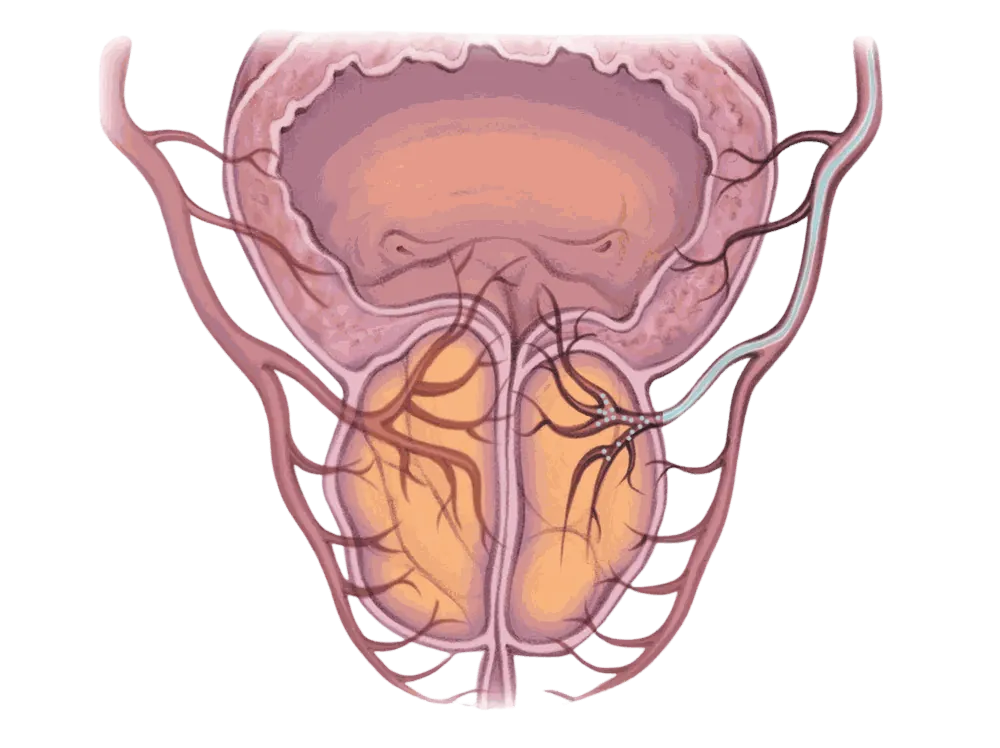
What causes the symptoms?
The prostate sits below the bladder and wraps around the urethra, the tube that carries urine out of the body. From around midlife the gland tends to grow, a process called benign prostatic hyperplasia (BPH). As it enlarges, it squeezes the urethra and makes the bladder work harder, which is what produces the urinary symptoms.
BPH is not prostate cancer, and having it does not increase your risk of cancer. It is a common, benign part of ageing. That said, urinary symptoms can have other causes, so a proper assessment is worthwhile before deciding on treatment.
How an enlarged prostate is treated
There is no single treatment for everyone. Care usually starts with the simplest measures and steps up as needed. There is more between tablets and major surgery than many men realise.
Watchful waiting & lifestyle
If symptoms are mild, simple changes, such as adjusting evening fluids and caffeine, and reviewing medications, are often enough, with regular review to keep an eye on things.
Medication
Tablets that relax or gradually shrink the prostate can ease symptoms and are usually tried first. They work well for many men, though some notice side effects or find the benefit fades.
Prostate Artery Embolisation
A minimally invasive, image-guided day procedure that shrinks the prostate by reducing its blood supply, through a pinhole and with no instruments through the urethra. An option when medication no longer controls the symptoms.
Learn about PAE →Surgery (TURP & HoLEP)
Surgery removes or destroys prostatic tissue through the urethra, giving the greatest improvement in urinary flow. It is done under general or spinal anaesthesia, with a longer recovery.
The option between medication and surgery
Most men with an enlarged prostate are offered two things: tablets to manage the symptoms now, or, further down the track, surgery. There is another option in between, and because it is newer, many men simply have not heard of it.
Prostate artery embolisation (PAE) shrinks the prostate by reducing the blood supply that sustains it, easing pressure on the urethra. It is done through a pinhole at the wrist or groin, under light sedation, as a day procedure, with no instruments passing through the urethra and no urinary catheter. It preserves ejaculatory function in the vast majority of men, and is an option for those on blood thinners who want to avoid the bleeding risk of surgery.
PAE is not for everyone, and surgery still gives the greatest improvement in flow for larger glands. Which option suits you comes down to your symptoms, your prostate size and your priorities, and that is what a consultation is for. Read more about prostate artery embolisation →

Your next step
Understand what is driving your symptoms
A consultation is the clearest way to find out what is causing your symptoms and which treatments are likely to help. Here is what to expect.
- 1Get in touchAsk your GP for a referral via HealthLink (EDI: mihdesai), or contact our rooms directly.
- 2Your consultationWe review your symptoms and imaging, with a full urological assessment as standard, and explain your options.
- 3A clear planYou leave with an honest view of what is likely to help, whether that is medication, PAE, or a referral for surgery.
Considering PAE? It is covered by Medicare, and we see patients privately or in the public hospital system. More on cost →
GP or specialist? Refer a patient →
Frequently asked questions
Common questions about an enlarged prostate. If you're unsure what is right for you, ask us directly.
What is an enlarged prostate (BPH)?
Is an enlarged prostate the same as prostate cancer?
What are the symptoms of an enlarged prostate?
Can an enlarged prostate be treated without surgery?
What is prostate artery embolisation, and how does it fit in?
When should I see a specialist about urinary symptoms?
Explore more
Written and reviewed by Dr Mihir Desai & Dr Suhrid Lodh · Last reviewed August 2026